• Skip to main content
(800) 817-8763
Get a Free Quote
Menu
  • Products
    • Countertops
      • Granite Countertops
      • Quartz Countertops
      • Marble Countertops
      • Quartzite Countertops
      • Laminate Countertops
      • Acrylic Solid Surface
      • Recycled Material
    • Fixtures
    • Cabinetry
    • Promotions
  • Our Process
  • Services
    • Customer Service
    • Care and Maintenance
  • Resources
    • Project Features
    • Knowledge Center
    • Gallery
  • Company
    • About Us
    • Careers
  • Contact Us
Menu
  • Products
    • Countertops
      • Granite Countertops
      • Quartz Countertops
      • Marble Countertops
      • Quartzite Countertops
      • Laminate Countertops
      • Acrylic Solid Surface
      • Recycled Material
    • Fixtures
    • Cabinetry
    • Promotions
  • Our Process
  • Services
    • Customer Service
    • Care and Maintenance
  • Resources
    • Project Features
    • Knowledge Center
    • Gallery
  • Company
    • About Us
    • Careers
  • Contact Us

Guide

Oct 17 2025

Granite vs Quartz: Pros and Cons

The Beauty and Strength of Quartzite Countertops

granite-vs-quartz-pros-and-cons

When considering new countertops, two popular materials often come to mind: granite and quartz. Each material has its distinct qualities that make it appealing for different needs and preferences. Essentially, it’s not so much that one is better than the other– it’s that they are best in specific circumstances. You need to know what situations call for granite, which ones need quartz, and what type of countertop scenario truly does come down to personal preference. Choosing between the two can be challenging, so understanding the key differences, along with the pros and cons of each, is essential when making your decision.

Granite Countertops: Pros and Cons

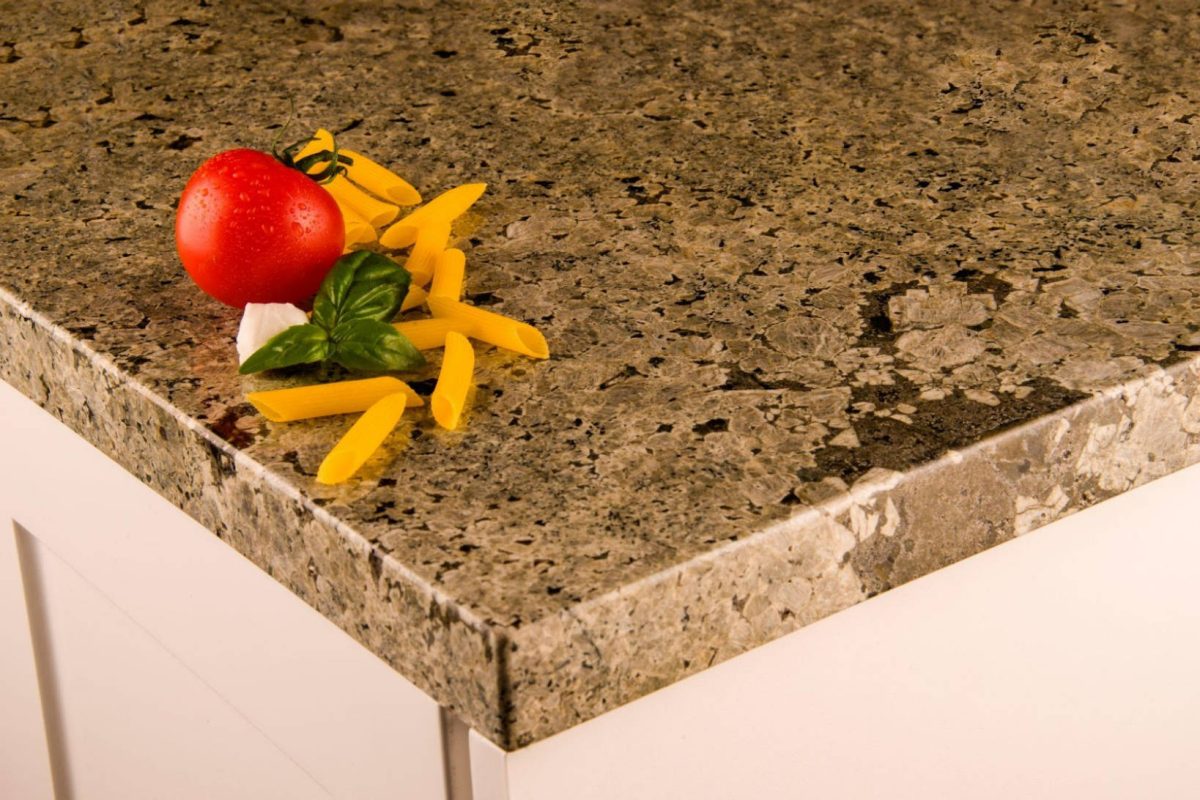
Granite has long been favored for its durability and natural beauty. As a natural stone, granite offers unique, one-of-a-kind patterns that can add an elegant touch to any kitchen or bathroom. One of the major advantages of granite countertops is their strength. Granite is resistant to scratches, heat, and stains, making it ideal for high-traffic areas where durability is important. With proper sealing, granite can maintain its aesthetic appeal for many years.

However, granite countertops come with some drawbacks. The natural stone is porous, which means it requires regular sealing to prevent staining from liquids like wine or oil. While granite is resistant to heat, sudden temperature changes can cause the stone to crack. Additionally, granite is heavy, which can make installation more challenging and might require additional support.

Quartz Countertops: Pros and Cons

Quartz countertops, made from engineered stone, are known for their consistent appearance and excellent functionality. One of the major benefits of quartz is its low maintenance. Unlike granite, quartz does not require sealing because it is non-porous. This makes it easier to clean, as you don’t have to worry about stains from spills. Quartz is also highly resistant to scratches and can withstand high heat. Its engineered nature allows for a wide variety of colors and patterns, making it an attractive option for those seeking consistency in their countertop appearance.

On the downside, quartz countertops are not as heat-resistant as granite. Although they can handle hot pots and pans, sudden temperature changes can cause damage. Additionally, while quartz is quite durable, it can be more prone to chipping or cracking under impact compared to granite, especially around edges. Some individuals prefer the natural stone look of granite over the manufactured appearance of quartz, which may be a consideration for those seeking a more organic aesthetic.

Which Is Better, Quartz or Granite?

Choosing between quartz and granite ultimately depends on your priorities. If you value a natural, one-of-a-kind look and are willing to put in the time to maintain the surface, granite might be the right choice for you. However, if you prefer low-maintenance countertops with consistent patterns and colors, quartz is an excellent alternative. Both materials offer long-lasting performance and timeless appeal, but the right choice will depend on your specific needs and lifestyle.

At Alps Craftsman, we understand that selecting the right countertop material is an important decision. Whether you’re drawn to the natural beauty of granite or the easy maintenance of quartz, we can help guide you through your options. Contact us today for a free quote, and let us help you bring your vision to life with top-quality countertops.

Get My Free Estimate

Hear From Satisfied Customers

We Do A Marvelous Job!

Call (800) 817-8763

Categorized: Knowledge Center
Tagged: Guide

Oct 17 2025

Understanding Porcelain Countertops

Understanding Porcelain Countertops

porcelain-countertops

When you think of porcelain, does your grandma’s priceless porcelain dinnerware come to mind? You know, the stuff that was so fragile it had to be locked in a cabinet? If so, you might be confused. Why would anybody use porcelain countertops if they’re that fragile? Good news: porcelain countertops aren’t like that at all! Today, let’s take a look at porcelain countertops and see just how great they are for your kitchen or bathroom.

What Are Porcelain Countertops?

Porcelain countertops are tough, durable countertops. The manufacturing process of porcelain countertops involves mixing raw minerals, forming slabs, and subjecting them to extreme heat exceeding 2,650 degrees Fahrenheit. This results in a dense, non-porous material that resists stains, scratches, and heat.

Unlike natural stones, porcelain can be engineered to replicate various textures and patterns, providing versatility in design. You can find a porcelain countertop to match any home aesthetic; your fabricator can help you find one if they don’t have the color you love in stock. Porcelain comes in various thicknesses, from thin veneers to full thickness slabs; you have lots of options if you like this type of countertop.

Porcelain Countertop Installation

Installing porcelain countertops requires precision and expertise due to the material’s hardness and thin profile. Professional installers use specialized tools to cut and fit the slabs accurately, ensuring minimal seams and a flawless finish. The lightweight nature of porcelain allows for installation over existing countertops, offering a convenient upgrade option. However, the material’s rigidity necessitates careful handling to prevent cracking during the installation process.

Porcelain Countertop Pros and Cons

Porcelain countertops offer numerous advantages, including exceptional durability, heat resistance, and low maintenance. Their non-porous surface makes them highly resistant to stains and scratches, and they do not require sealing. And porcelain’s ability to mimic natural stone provides the look without the associated upkeep! You also don’t need any special cleaners to keep them looking great; mild soap and water will do the trick.

Furthermore, porcelain’s UV resistance ensures that the countertop’s color remains consistent over time, even if your kitchen has a ton of natural light and you put the countertop right by the window. And the material’s lightweight nature allows for easier installation over existing surfaces, offering a practical upgrade option without extensive renovation. Of course, if you want to take out your old countertop entirely and replace it with porcelain, that’s an option too!

However, there are considerations to keep in mind. The hardness of porcelain, while contributing to its durability, also makes it brittle and inflexible, increasing the risk of cracking if subjected to blunt force or heavy objects. Additionally, the thin profile of porcelain slabs limits edge profile options, typically resulting in simple, straight edges. Repairing chips or cracks can be challenging, often necessitating professional intervention. But given how tough and durable the material is, those cracks are less likely to happen than with many other materials.

Porcelain Countertop Costs

The cost of porcelain countertops varies based on factors such as design complexity, slab thickness, and installation requirements. While porcelain may be more expensive than other synthetic materials, it is often more affordable than natural stones like quartzite, marble, and granite. Investing in porcelain countertops can be cost-effective in the long term due to their longevity and minimal maintenance needs.

Why Choose Alps Craftsman for Your Porcelain Countertops

At Alps Craftsman, we specialize in providing high-quality porcelain countertops tailored to your design preferences and functional needs. Our team of skilled professionals ensures precise installation, delivering a flawless finish that enhances the beauty and utility of your space. We are committed to guiding you through every step of the process, from selection to installation, ensuring a hassle-free experience.​ Contact us today for a free quote, and let us help you transform your home with the elegance and durability of porcelain countertops!

Get My Free Estimate

Hear From Satisfied Customers

We Do A Marvelous Job!

Call (800) 817-8763

Categorized: Knowledge Center
Tagged: Guide

Oct 17 2025

Limestone Countertops: Timeless Charm for Your Home

Limestone Countertops: Timeless Charm for Your Home

limestone-countertops

Limestone is an uncommon countertop choice that’s becoming more popular with homeowners due to the stone’s unique characteristics. While it might not be a household name like granite, marble, quartz, or quartzite, it has a special appeal if you like a highly textured, organic look for your countertops or want a local connection– limestone is quarried throughout the US. Read on to find out more about limestone countertops and to see if they’re right for you!

What Are Limestone Countertops?

Limestone countertops are crafted from a sedimentary rock formed over millions of years through the compression of marine fossils, shells, and other organic materials. This natural composition gives limestone its distinct texture, subtle veining, and soft, earthy hues ranging from beige and cream to gray and even blue tones. One of the reasons limestone works well as a countertop material is its natural heat resistance. Since it forms under pressure and heat, it can withstand high temperatures better than many synthetic materials. And because it is softer than granite or quartz, limestone is easier to shape and customize. This allows for intricate edge detailing and smooth finishes that contribute to a refined, high-end appearance.

Limestone Countertops Pros and Cons

One of the notable advantages of limestone is its heat resistance. You can place hot pots directly on the surface without causing immediate damage, making it great for busy kitchens. However, it’s advisable to use trivets or hot pads to maintain the countertop’s finish– any hot pot contact should be brief.

Affordability is another appealing aspect. Limestone countertops are generally more cost-effective than other natural stones like granite or marble, offering the elegance of natural stone without the hefty price tag. This makes them an attractive option for homeowners seeking both beauty and budget-friendliness.

On the downside, limestone is a relatively soft and porous material. This softness makes it susceptible to scratches and dents from daily use, especially in high-traffic areas. Additionally, its porosity means it can absorb spills, leading to stains if not promptly cleaned. Regular sealing and maintenance are necessary to preserve its appearance and functionality.​

Limestone Countertops Installation

Proper installation of limestone countertops is essential to ensure their longevity and performance. The process begins with precise measurements of your space to create templates that guide the cutting of the limestone slabs. Given limestone’s weight and fragility, professional handling during transportation and placement is crucial to prevent damage.​ 

The installation surface must be sturdy and level to support the limestone’s weight adequately. Our team will apply a suitable adhesive to secure the slabs, followed by careful sealing of joints to create a continuous surface. Then, we seal the entire countertop is vital to protect against stains and moisture infiltration, enhancing the stone’s durability.

Limestone Countertop Maintenance and Care

Maintaining limestone countertops requires a proactive approach– it looks great, but you need to be careful if you want to keep it looking that way! Regularly applying a high-quality sealant helps protect the porous surface from staining. Cleaning should be done with pH-balanced, non-abrasive cleaners to avoid etching the stone. You also need to wipe up spills right away,  acidic substances like wine, coffee, and juice. Using cutting boards and avoiding dragging heavy objects across the surface can minimize scratches and dents.

Is Limestone Right for Your Home?

Deciding on limestone countertops depends on your household’s activity level and your willingness to perform regular maintenance. For those who appreciate natural stone’s unique character and are prepared to invest time in its upkeep, limestone can be a rewarding choice. Its timeless appeal and natural elegance can significantly enhance your home’s aesthetic.

If you want to work with limestone countertops, there’s no better choice than Alps Craftsman. We deliver exceptional craftsmanship and personalized service, ensuring your countertops not only look stunning but also stand the test of time.​ Reach out today for a free quote and to talk more about limestone countertops!

Hear From Satisfied Customers

We Do A Marvelous Job!

Call (800) 817-8763

Categorized: Kitchens
Tagged: Guide

Aug 19 2025

How to Make Small Kitchens Look Bigger with Marble Countertops

As summer settles in, the kitchen becomes a central spot for cold drinks, light meals, and quick gatherings. During these warmer months, comfort matters just as much as function. One material stands out for both: marble. 

There’s nothing wrong with a cozy kitchen, and many homeowners (and renters) prefer the ease and convenience of having everything right at hand. But sometimes while a small kitchen is perfectly functional, aesthetically you might want more out of it. Mable countertops are a fantastic way to achieve this, due to the way the stone interacts with light. Here’s how to make a smaller kitchen feel expansive with marble countertops. 

The Science Behind Marble’s Appearance

If you’ve ever taken a look at a marble countertop and thought you saw it glowing, you did. Well, sort of. Marble countertops don’t glow like a lightbulb, but many people describe them as being radiant or having luminance. The reason for this is geology and optics– in other words, there’s a reason marble looks the way it does. 

Marble has a distinctive ability to scatter light thanks to its crystalline structure and naturally translucent qualities. Each slab of marble is made up of interlocking calcite crystals, which allow light to penetrate just beneath the surface before bouncing back out. This subtle refraction creates a soft, luminous glow known as “surface depth,” giving marble its signature sense of radiance. 

Marble’s fine veining and varied mineral inclusions enhance this effect by breaking up light in different directions, adding dimension and movement across the stone. In a small kitchen, this interplay of light makes the countertop appear more dynamic and airy, helping the entire space feel brighter and more open.

Pairing Marble With Strategic Lighting

Lighting plays an important role in how marble appears, and it’s one of the most effective ways to enhance its impact in a small space. Under-cabinet lights, pendant fixtures, or recessed ceiling lighting allow the stone’s crystalline surface to interact beautifully with both direct and ambient illumination. Even if natural light is limited, carefully placed artificial lighting can intensify marble’s reflective qualities, creating a brighter and more expansive atmosphere.

Using Color and Patterns To Your Advantage

When selecting marble for a smaller kitchen, color can have as much impact as the stone’s light-reflecting qualities. Pale shades such as classic white, soft cream, or gentle gray can create a sense of openness by bouncing light around the room. The effect is similar to painting walls in lighter colors; your eyes perceive the space as larger because the surfaces don’t create heavy visual stops. Darker marble can still work in compact kitchens, but it pairs best with ample lighting and lighter cabinetry to prevent the space from feeling closed in.

The vein pattern in your marble can also change the way a room looks. It can guide the eye and influence how large a surface feels. Long, flowing veins can make countertops seem longer, while fine, delicate patterns help maintain an uncluttered and airy appearance. Aligning the direction of the veining with the kitchen’s layout encourages visual flow, helping the room feel larger than it is.

When you pick a slab with consistent veining, it creates a smooth visual transition across different countertop sections. The backsplash is another way to change the look of the room, making it seem bigger than it actually is. When paired with matching backsplash material, the effect can extend vertically, adding even more perceived space.

Bringing It All Together

Marble countertops offer more than elegance. They can transform a compact kitchen into a space that feels open and inviting. By choosing the right color, enhancing it with thoughtful lighting, and making strategic use of veining, you can maximize marble’s natural ability to brighten and expand the room. At Alps Craftsman, we can help you select the perfect marble for your kitchen’s size and style. Contact us today for a free quote and discover how marble can make your small kitchen feel bigger, brighter, and more beautiful.

Categorized: Care and Maintenance
Tagged: Guide

Aug 16 2025

Quartz For Unique Kitchen Design: Putting Your Stamp on Your New Kitchen

Gone are the days of the cookie-cutter kitchen. Today’s homeowners want the most-used room in the house to be unique and feel like a reflection of their personality. One of the easiest ways to do that is by using quartz for your countertops. Quartz countertops have the advantages of natural stone, plus several that are unique to this engineered material. Whether you’re going for bold and modern or soft and inviting, quartz provides the colors and patterns to make it happen. 

Custom Color Palettes That Speak To You

Quartz is an engineered material that is manufactured from naturally occurring quartz. Once powdered, resins, binders, and pigments are added to the stone to create a surface that’s tough and durable but also relatively lightweight and easy to clean. This manufacturing process makes it possible for quartz to appear in an array of colors, many of which are not found in nature. Whether you’re going for bold and modern or soft and inviting, quartz provides the colors and textures to make it happen. 

Additionally, quartz’s consistency makes unique designs easier to execute. You don’t have to worry about finding slabs that coordinate; you can just order more of the same pattern if you want additional counter space or a quartz backsplash. That consistency gives you more control over your design. 

And if you like the look of natural stone but prefer the ease of quartz, you can find it in patterns that mimic the natural veining and color patterns of natural stone. Marble-look quartz lets you bring in the soft, elegant look of marble with the durability and budget-friendliness of quartz; quartz that mimics granite weighs less than the natural stone, so it’s ideal for upper-floor use or for mounting as a waterfall island. 

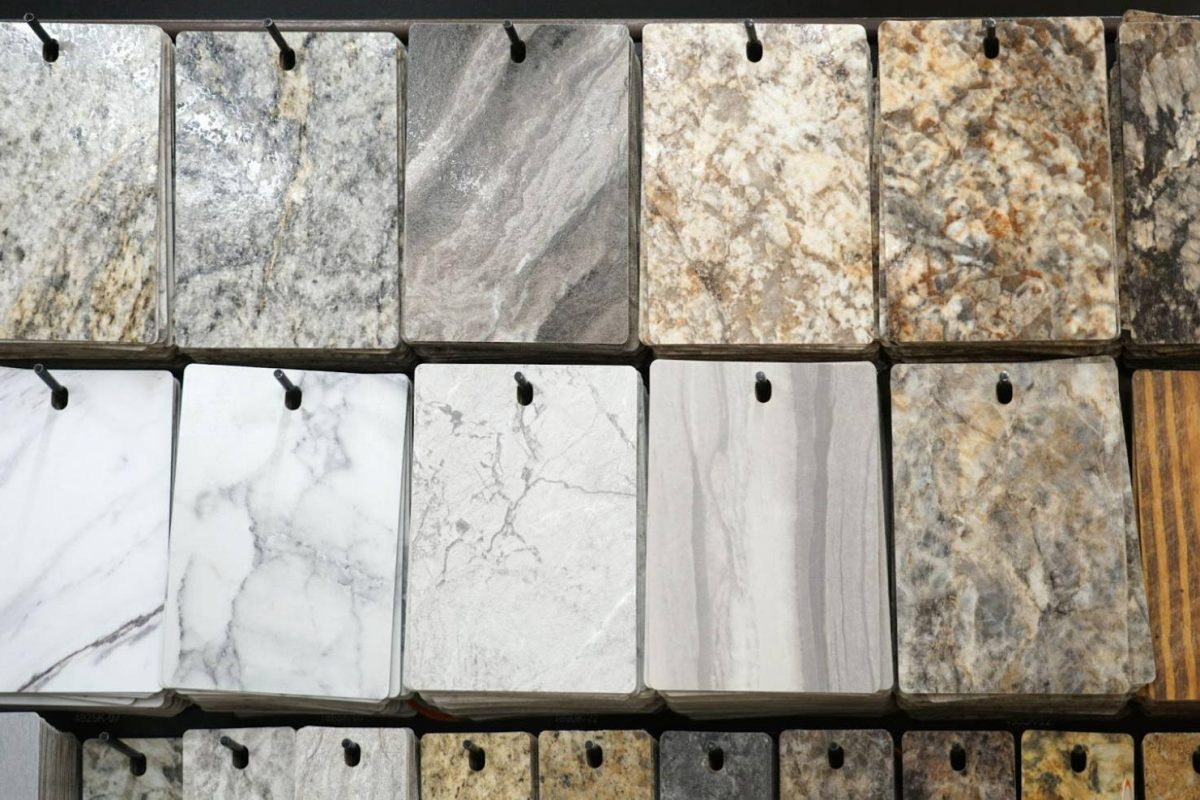
But what if you don’t want the look of natural stone? Quartz comes in a rainbow of colors, ranging from cherry red to deep, moody indigo. Manufactures create quartz in shades like matte black, soft sage green, rich cocoa brown, and white with sparkling inclusions; if you can’t find the shade you want, talk to your fabricator for help sourcing just the right color. This versatility lets you coordinate your countertops with cabinetry, flooring, and wall treatments in ways that feel fresh and original.

Texture Adds Personality And Depth

Beyond color, texture plays a key role in making your kitchen stand out. Quartz surfaces are available in polished, honed, and matte finishes, giving you control over how light interacts with the surface. A polished finish creates a sleek, reflective look that feels contemporary and clean. Honed and matte finishes bring a softer appearance that works well in understated or organic-inspired designs. These subtle differences help transform a basic kitchen into something with depth and presence.

The edge profile makes a difference, too. An intricate ogee edge looks elegant and glamorous, while a chiseled edge feels organic and earthy. Mitered edges have an industrial modern chic, and a rounded bullnose edge has a classic, vintage vibe. Talk to your fabricator about the edge options they can create; you might be surprised by the variety available!

Bringing Design Details Together

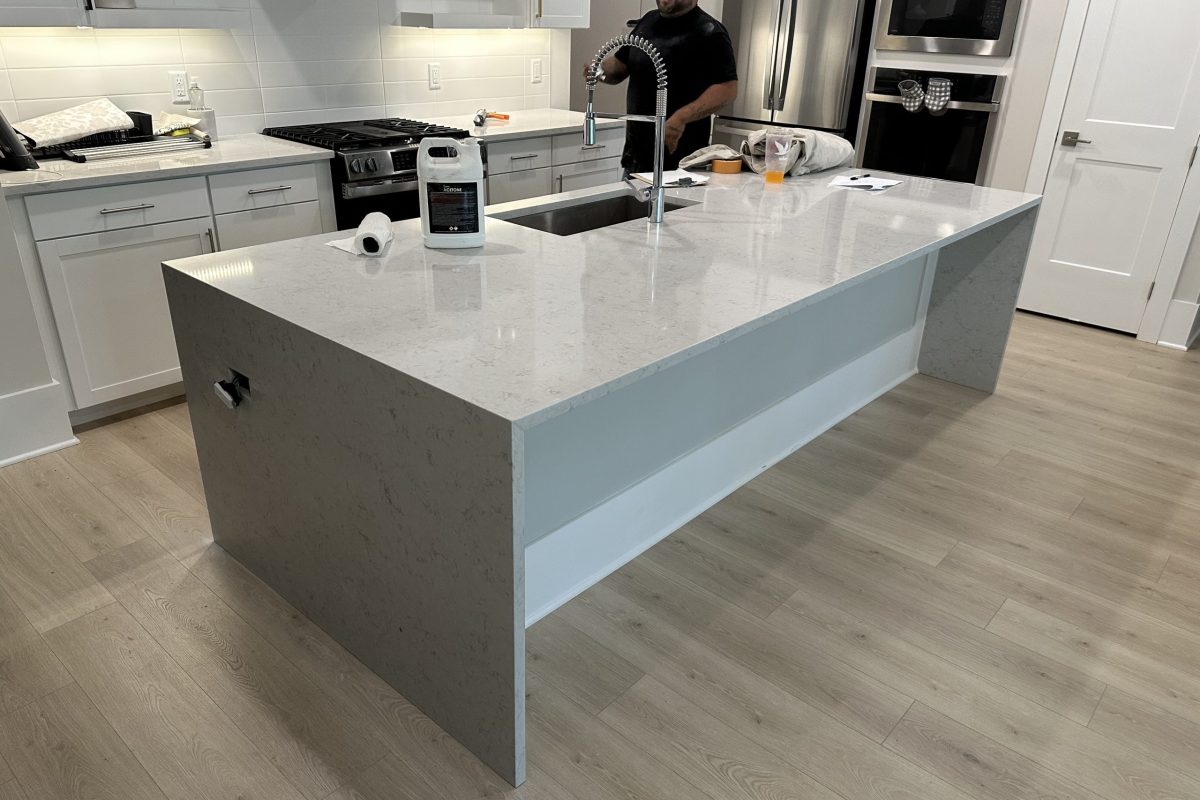
Quartz countertops offer the best sense of cohesion when paired with the right design elements. For example, a waterfall edge can highlight a quartz slab’s veining or tone, drawing attention to the material itself. Because quartz is non-porous and uniform, it supports clean, uninterrupted lines that work well in both minimal and detailed designs. This flexibility allows you to experiment with layouts and configurations that reflect your individual style.

Another key element of a unique kitchen design is the cabinetry.  Whether you prefer light wood finishes or rich, painted tones, your choice of cabinets should work in tandem with your quartz surface to create a balanced and inviting space. Custom cabinetry is an excellent option for those who want a truly one-of-a-kind kitchen. When paired with quartz, custom cabinetry enhances both the appearance and functionality of your kitchen, offering a refined and personal touch. 

Make Your Kitchen Design Truly Yours

If you’re designing a kitchen that feels like your own, quartz can help bring that vision to life. With so many options in tone, texture, and pattern, quartz offers the flexibility and beauty to match your individual taste. Alps Craftsman provides premium quartz materials to help you create a kitchen that’s as functional as it is expressive. Ready to explore the quartz surfaces that will help you put your stamp on your space? Contact us today for a free quote!

Categorized: Project Spotlights
Tagged: Guide

  • « Go to Previous Page
  • Go to page 1
  • Interim pages omitted …
  • Go to page 3
  • Go to page 4
  • Go to page 5
  • Go to page 6
  • Go to page 7
  • Interim pages omitted …
  • Go to page 9
  • Go to Next Page »
Alps Craftsman

For over 35 years, our family-owned business has delivered exceptional service and craftsmanship. We treat every client like family, offering top-quality countertops, cabinetry, and fixtures. From small projects to large remodels, we ensure integrity, efficiency, and superior results.

Facebook-f Instagram
Company
Menu
  • About Us
  • Gallery
  • Our Process
  • Blog
  • FAQ
  • Careers
  • Contact Us
Services
Menu
  • Countertops
  • Granite
  • Marble
  • Quartz
  • Quartzite
  • Laminate
  • Recycled Material
  • Acrylic Solid Surface
  • Fixtures
  • Cabinetry
  • Promotions
Our Location
  • 500 Memorial Drive, Suite 1 Somerset, NJ 08873
  • (800) 817-8763
  • info@alpscraftsman.com
  • License: HIC#13VH05142400
Get a Free Quote
Proudly serving NJ, NY, PA customers since 1991
Copyright © 2026 Alps Craftsman HIC#13VH05142400. All rights reserved. | Privacy Policy | Accessibility | Sitemap
Manage Consent
To provide the best experiences, we use technologies like cookies to store and/or access device information. Consenting to these technologies will allow us to process data such as browsing behavior or unique IDs on this site. Not consenting or withdrawing consent, may adversely affect certain features and functions.
Functional Always active
The technical storage or access is strictly necessary for the legitimate purpose of enabling the use of a specific service explicitly requested by the subscriber or user, or for the sole purpose of carrying out the transmission of a communication over an electronic communications network.
Preferences
The technical storage or access is necessary for the legitimate purpose of storing preferences that are not requested by the subscriber or user.
Statistics
The technical storage or access that is used exclusively for statistical purposes. The technical storage or access that is used exclusively for anonymous statistical purposes. Without a subpoena, voluntary compliance on the part of your Internet Service Provider, or additional records from a third party, information stored or retrieved for this purpose alone cannot usually be used to identify you.
Marketing
The technical storage or access is required to create user profiles to send advertising, or to track the user on a website or across several websites for similar marketing purposes.
  • Manage options
  • Manage services
  • Manage {vendor_count} vendors
  • Read more about these purposes
View preferences
  • {title}
  • {title}
  • {title}
Get Offer

"*" indicates required fields

This field is for validation purposes and should be left unchanged.
Consent*

Oops! We could not locate your form.