
Limestone Countertops: Timeless Charm for Your Home
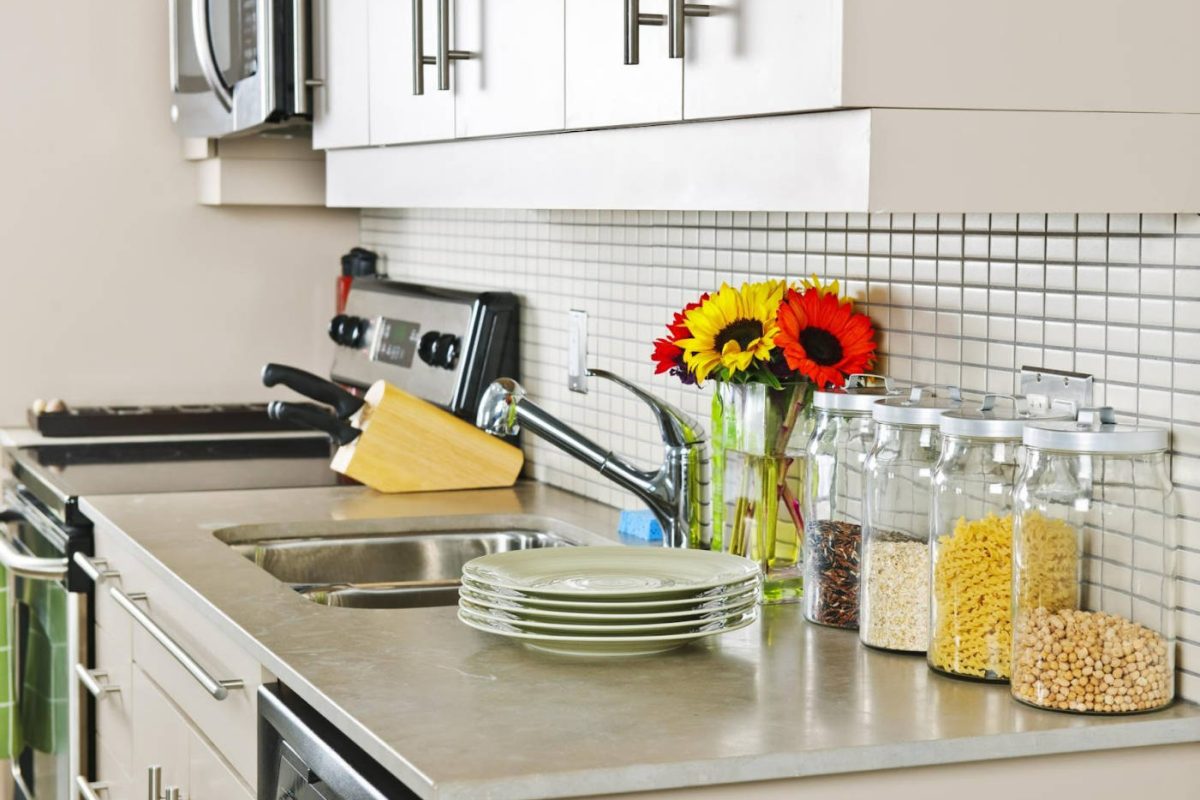
Limestone is an uncommon countertop choice that’s becoming more popular with homeowners due to the stone’s unique characteristics. While it might not be a household name like granite, marble, quartz, or quartzite, it has a special appeal if you like a highly textured, organic look for your countertops or want a local connection– limestone is quarried throughout the US. Read on to find out more about limestone countertops and to see if they’re right for you!
What Are Limestone Countertops?
Limestone countertops are crafted from a sedimentary rock formed over millions of years through the compression of marine fossils, shells, and other organic materials. This natural composition gives limestone its distinct texture, subtle veining, and soft, earthy hues ranging from beige and cream to gray and even blue tones. One of the reasons limestone works well as a countertop material is its natural heat resistance. Since it forms under pressure and heat, it can withstand high temperatures better than many synthetic materials. And because it is softer than granite or quartz, limestone is easier to shape and customize. This allows for intricate edge detailing and smooth finishes that contribute to a refined, high-end appearance.
Limestone Countertops Pros and Cons
One of the notable advantages of limestone is its heat resistance. You can place hot pots directly on the surface without causing immediate damage, making it great for busy kitchens. However, it’s advisable to use trivets or hot pads to maintain the countertop’s finish– any hot pot contact should be brief.
Affordability is another appealing aspect. Limestone countertops are generally more cost-effective than other natural stones like granite or marble, offering the elegance of natural stone without the hefty price tag. This makes them an attractive option for homeowners seeking both beauty and budget-friendliness.
On the downside, limestone is a relatively soft and porous material. This softness makes it susceptible to scratches and dents from daily use, especially in high-traffic areas. Additionally, its porosity means it can absorb spills, leading to stains if not promptly cleaned. Regular sealing and maintenance are necessary to preserve its appearance and functionality.
Limestone Countertops Installation
Proper installation of limestone countertops is essential to ensure their longevity and performance. The process begins with precise measurements of your space to create templates that guide the cutting of the limestone slabs. Given limestone’s weight and fr