
• Skip to main content
(800) 817-8763
Get a Free Quote
Menu
  • Products
    • Countertops
      • Granite Countertops
      • Quartz Countertops
      • Marble Countertops
      • Quartzite Countertops
      • Laminate Countertops
      • Acrylic Solid Surface
      • Recycled Material
    • Fixtures
    • Cabinetry
    • Promotions
  • Our Process
  • Services
    • Customer Service
    • Care and Maintenance
  • Resources
    • Project Features
    • Knowledge Center
    • Gallery
  • Company
    • About Us
    • Careers
  • Contact Us
Menu
  • Products
    • Countertops
      • Granite Countertops
      • Quartz Countertops
      • Marble Countertops
      • Quartzite Countertops
      • Laminate Countertops
      • Acrylic Solid Surface
      • Recycled Material
    • Fixtures
    • Cabinetry
    • Promotions
  • Our Process
  • Services
    • Customer Service
    • Care and Maintenance
  • Resources
    • Project Features
    • Knowledge Center
    • Gallery
  • Company
    • About Us
    • Careers
  • Contact Us

Guide

Aug 23 2026

What Are Engineered Granite Countertops? Engineered vs. Natural Granite Compared
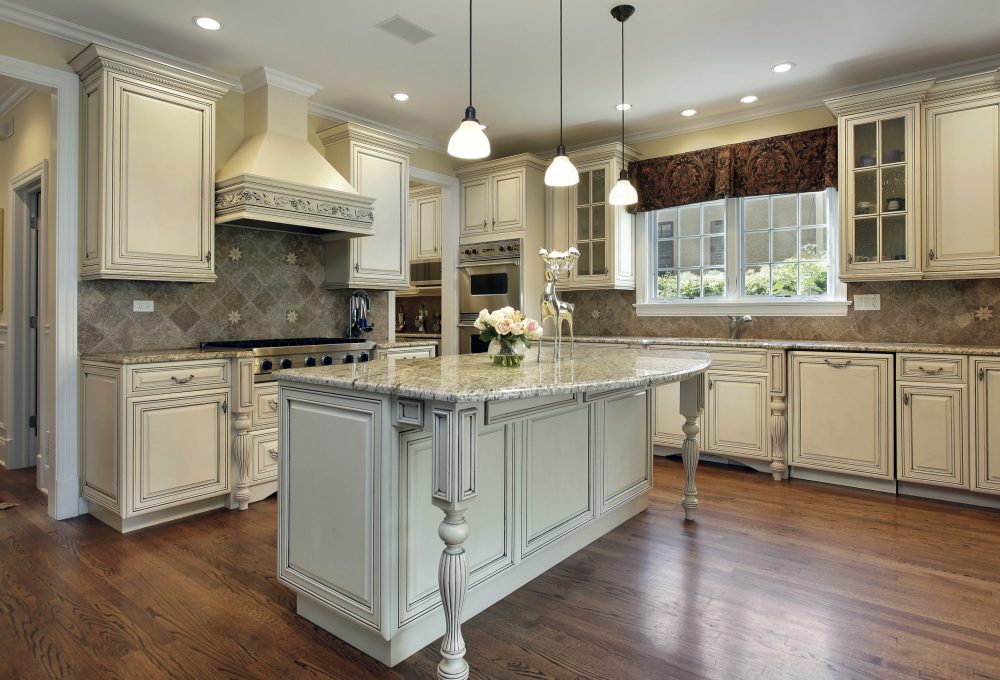
What Are Engineered Granite Countertops? Engineered vs. Natural Granite Compared

Kitchen with large granite island

Homeowners searching for countertop options often come across the phrase “engineered granite” and assume it describes a manufactured version of the granite slabs fabricators like us install every week. In reality, granite itself is never engineered. It is a natural igneous rock, cut directly from quarry blocks, and every slab is one hundred percent stone.

The term usually gets applied, sometimes loosely by marketers, to engineered quartz, which is a genuinely man-made product that can resemble granite in certain colorways. Understanding the difference matters before you commit to a material for a kitchen or bathroom remodel.

Natural Granite: Formed by the Earth, Cut by Hand

Our granite countertops begin as magma or lava that cooled slowly underground over millions of years, crystallizing into the mineral patterns you see in a finished slab. Because it comes straight from a quarry, no two slabs are identical, and the veining or speckling in one piece of granite will never match another exactly.

Granite is dense and heat resistant, and it holds up well to scratches from daily kitchen use. As a natural stone, it is porous, so periodic sealing is part of caring for it, and seams between pieces will be visible depending on the size and layout of your countertop run.

Engineered Quartz: The Man-Made Product Often Mistaken for “Engineered Granite”

Our quartz countertops are the actual engineered product homeowners are usually picturing. Manufacturers grind natural quartz crystal, combine it with resin and pigment, then pour and bake the mixture into slabs. That process is what allows quartz to be produced in a wide range of consistent colors and patterns, including some that mimic the look of granite.

Because the manufacturing process fills every gap with resin, quartz slabs come out non-porous and do not require sealing. The tradeoff is that the resin makes quartz less heat tolerant than natural granite, so trivets and hot pads matter more with this material.

Engineered Granite or Natural Granite: Which One Is Right for Your Kitchen?

The best way to decide between natural and engineered options is to see them in person. Reach out to Alps Craftsman to schedule a visit to our Somerset design center, where our team can walk you through granite and quartz slabs and help you choose the right fit for your home.

Get A Free Estimate

Comparing Performance: Heat, Porosity, and Long-Term Wear

Natural granite wins on heat resistance, which is why it remains popular with homeowners who cook often and like pulling pans straight off the stove. Engineered quartz wins on stain resistance and color consistency, since there is no sealing routine to track and no variation in pattern from one end of the slab to the other.

Both materials can chip if struck hard enough at the wrong angle, and both can be repaired, though repairs tend to blend in more easily on granite because of its busier, more natural patterning.

Pro Tip: If you are set on a granite look but want a non-porous surface, ask to see quartz colors modeled after granite veining before assuming you need to compromise on either performance or aesthetics.

Which Material Fits Your NJ, NY, or PA Project

The right choice depends on how your household uses the space. A family that entertains often and wants zero sealing maintenance may lean toward quartz, while a homeowner who wants the organic movement only nature can produce, and does not mind a simple sealing routine, will likely prefer natural granite.

Our team at Alps Craftsman has fabricated and installed both materials across the Tri-State Area for more than three decades, and we can help you weigh the tradeoffs against your specific kitchen or bathroom layout. Browse examples of both in our project gallery before you decide.

See Both Materials Side by Side

The best way to decide between natural and engineered options is to see them in person. Reach out to Alps Craftsman to schedule a visit to our Somerset design center, where our team can walk you through granite and quartz slabs and help you choose the right fit for your home.

Your Complete Partner
from Design to Installation

At Alps Craftsman, we pride ourselves on being the premier choice for homeowners, custom builders, and commercial clients alike. Specializing in sourcing, fabricating, and installing cabinets and countertops of all dimensions, we ensure every project, big or small, is handled with utmost precision and efficiency. Get in touch with our Builder Team to discuss your next project.

Call us Today!
Get A Free Estimate

Hear From Satisfied Customers

We Do A Marvelous Job!

Call (800) 817-8763

Categorized: Knowledge Center
Tagged: Guide

Aug 13 2026

What Is a Porous Surface? Porous vs. Non-Porous Countertops Compared

What Is a Porous Surface? Porous vs. Non-Porous Countertops Compared

granitehero

A porous countertop has microscopic openings in its surface where liquids, oils, and bacteria can settle if given the chance. These openings come from how the material formed. Natural stone cools, compresses, and crystallizes underground over millions of years, and that process leaves tiny gaps between mineral grains.

Those gaps are not visible to the naked eye in most cases, but they are there, and they determine how a countertop behaves in daily use. At our design center in Somerset, we walk homeowners through this distinction constantly because it affects far more than looks. It shapes how a countertop is cared for and how it holds up over years of cooking, entertaining, and everyday spills.

Granite and Quartzite: Beautiful, Natural, and Porous

Our granite countertops and quartzite countertops are both quarried from the earth, and both are naturally porous. Granite forms from cooled magma or lava, while quartzite begins as sandstone that gets transformed by heat and pressure over time. The result in both cases is a dense, hard surface with small pores scattered throughout.

Because these stones are porous, a sealer is applied to help resist staining. The sealer fills the pores near the surface so liquids bead up instead of soaking in. It does not make the stone impervious, and the degree of porosity varies from one slab to the next depending on the color and mineral makeup.

Pro Tip: Darker, busier granite patterns tend to hide the natural pits and fissures that come with a porous stone far better than lighter, more uniform slabs.

Quartz: An Engineered, Non-Porous Alternative

Quartz is a different story entirely. Our quartz countertops are engineered, not quarried. Manufacturers grind natural quartz crystals and combine them with resin and pigment, then cure the mixture under heat to form a slab. That resin fills every gap during production, so the finished surface has no pores for liquid to enter.

This is why quartz never needs sealing. It is worth noting that non-porous does not mean stain-proof. Certain dyes, oils, and acidic substances can still discolor quartz if left sitting on the surface for an extended period, so prompt cleanup still matters.

Porous vs. Non-Porous Countertops: Which One Is Right for Your Kitchen?

Contact Alps Craftsman to visit our Somerset design center, hold real slabs of granite, Quartzite, and quartz side by side, and get expert guidance on the porous or non-porous surface that fits your home best.

Get A Free Estimate

How Porosity Affects Sealing, Staining, and Daily Care

The practical difference between porous and non-porous countertops comes down to what happens the moment a spill occurs. On granite or Quartzite, a puddle of red wine or olive oil needs to be wiped up before it has a chance to work into the stone. On quartz, that same spill sits on top of the surface and wipes away cleanly.

Neither material is difficult to live with day to day. Our full care and maintenance guides walk through the specific routines for each stone, from what cleaners to avoid to how to spot early signs that a natural stone surface is due for attention.

Choosing Between Porous and Non-Porous for Your Somerset Home

Homeowners who love the movement and one-of-a-kind veining of natural stone often accept the tradeoff of periodic sealing gladly. Homeowners who want the lowest possible day-to-day maintenance tend to gravitate toward quartz. Neither choice is wrong, and it comes down to how you cook, how you clean, and what look you want anchoring your kitchen or bathroom.

Our design team has walked NJ, NY, and PA homeowners through this exact decision since 1991, and we are glad to lay out the pros and cons for your specific space. You can also browse recent installations in our project gallery to see how both porous and non-porous materials look in real kitchens.

Ready to Compare Slabs in Person?

Photos only tell part of the story with natural stone and engineered surfaces. Contact Alps Craftsman to visit our Somerset design center, hold real slabs of granite, quartzite, and quartz side by side, and get expert guidance on the porous or non-porous surface that fits your home best.

Your Complete Partner
from Design to Installation

At Alps Craftsman, we pride ourselves on being the premier choice for homeowners, custom builders, and commercial clients alike. Specializing in sourcing, fabricating, and installing cabinets and countertops of all dimensions, we ensure every project, big or small, is handled with utmost precision and efficiency. Get in touch with our Builder Team to discuss your next project.

Call us Today!
Get A Free Estimate

Hear From Satisfied Customers

We Do A Marvelous Job!

Call (800) 817-8763

Categorized: Knowledge Center
Tagged: Guide

Jul 20 2026

Matching Countertops, Cabinetry, and Fixtures for a Better Kitchen Remodel in NJ, NY, and PA

Matching Countertops, Cabinetry, and Fixtures for a Better Kitchen Remodel in NJ, NY, and PA

Sherute 3

A kitchen remodel is really three decisions working at once: the countertops, the cabinetry, and the fixtures. When those three pull in the same direction, the room feels finished. When they fight each other, you notice it every day.

We have built kitchens across New Jersey, New York, and Pennsylvania for more than three decades, and the projects that land best are the ones planned as a whole, not piece by piece.

Here is how we help homeowners, designers, and builders line up all three from the start.

Pick One Element to Lead

Trying to choose everything at once is where most people get stuck. It helps to name one lead element and build around it.

Often that is the countertop, since a natural stone slab has a pattern you cannot change. Sometimes it is a bold cabinet color or a statement faucet. Once you pick the lead, every other choice gets easier.

Pro tip: Choose your stone slab first if you are going with natural stone. Cabinet and paint colors have far more options to match a slab than the other way around.

Let the Countertop Set the Palette

Your countertop carries the most visual weight in the room, so it makes sense to pull your colors from it.

Look at the background tone and the veining. A warm cream slab points you toward warm woods and soft whites, while a cool gray leans toward crisp whites and darker cabinets.

Pro tip: Bring a cabinet door sample and a fixture finish to the slab yard and set them on the stone. Judging them together beats guessing from memory.

How Do You Start Matching Countertops, Cabinetry, and Fixtures?

The trick is picking one element to lead and letting the rest follow, so nothing in the room competes for attention. We help homeowners across the Tri-State Area make those calls in the right order, before anything gets ordered.

Get A Free Estimate

Match Cabinetry to the Stone, Not the Trend

Cabinets cover more surface area than anything else, so their color and finish shape the whole room. The goal is to support the countertop, not talk over it.

If your slab is busy, quieter cabinetry lets the stone do the talking. If your slab is calm, you have room for a richer cabinet color or texture.

Pro tip: Pull one tone from your countertop’s veining and repeat it in your cabinet color. That single thread ties the two together without matching exactly.

Use Fixtures to Connect the Room

Fixtures are the jewelry of the kitchen. Faucets, handles, and pulls are small, but they set the metal story for the space.

Pick one main finish and repeat it. Mixing two finishes can work, but it takes a plan, so most homeowners are happier keeping fixtures consistent.

Pro tip: Match your cabinet hardware finish to your faucet. When the metals agree, the whole kitchen reads on purpose.

Plan for Your Light and Your Space

The same slab reads differently in a bright open kitchen than in a smaller galley. Northern light runs cool, so warm finishes balance it. South-facing rooms handle cooler tones well.

Older homes across the Tri-State Area often have quirks in layout and light, and those details should guide your choices as much as any trend.

Pro tip: View every sample in your own kitchen at morning and evening. Store lighting hides undertones you will live with for years.

Why One Team for All Three Helps

When countertops, cabinets, and fixtures come from different sources, matching them becomes your job, and the timelines rarely line up.

We handle all three under one roof, so the pieces are chosen together and installed on one schedule. That keeps the plan clear from the first measurement to the final install.

Pro tip: Ask any remodeler how they coordinate the three trades. One accountable team usually means fewer surprises on install day.

Ready to Plan a Kitchen That Works Together?

You do not have to piece this together alone. Our team helps homeowners, designers, and builders across New Jersey, New York, and Pennsylvania match countertops, cabinetry, and fixtures into one plan that fits how you actually live.

Come see the materials side by side in our showroom, and let us help you get every choice right the first time. Contact Alps Craftsman or request a free quote today.

Your Complete Partner
from Design to Installation

At Alps Craftsman, we pride ourselves on being the premier choice for homeowners, custom builders, and commercial clients alike. Specializing in sourcing, fabricating, and installing cabinets and countertops of all dimensions, we ensure every project, big or small, is handled with utmost precision and efficiency. Get in touch with our Builder Team to discuss your next project.

Call us Today!
Get A Free Estimate

Hear From Satisfied Customers

We Do A Marvelous Job!

Call (800) 817-8763

Categorized: Knowledge Center
Tagged: Guide

Jul 09 2026

How to Take Care of Marble Countertops Before Choosing Them for Your Kitchen

How to Take Care of Marble Countertops Before Choosing Them for Your Kitchen

mitered edge countertop

Marble has a look that few materials can match, which is why so many homeowners across New Jersey ask us about marble first.

But marble is a soft, porous natural stone, and the kitchen is one of the hardest working rooms in any home. Before you fall for a slab, it helps to know what caring for it actually involves.

At Alps Craftsman, we would rather you choose marble with your eyes open than regret it a year later. Here is what upkeep looks like day to day, so you can decide with confidence.

Understand How Marble Behaves

Marble forms from limestone, which makes it softer than granite or quartzite. It scratches, chips, and etches more easily than harder stones.

It is also porous, so it can absorb liquids like wine, coffee, and lemon juice when it is not protected. None of this makes marble a poor choice. It just means the care routine matters more.

Pro tip: Ask to see a honed (matte) sample next to a polished one. Honed marble hides small scratches and etch marks better, which many of our kitchen clients prefer.

Sealing Comes First and Often

Sealing is the most important habit for marble in a kitchen. A good sealer slows down how fast liquids soak in, giving you time to wipe spills before they set.

Most marble needs resealing every 6 to 18 months, depending on how much you cook and what you clean with. Harsh disinfectants break sealer down faster than mild soap.

Pro tip: Run a water test. Drop a little water on the surface, and if it darkens within a few minutes, it is time to reseal.

Build Gentle Cleaning Habits

Daily care for marble is simple, but the products you use make a difference. Warm water, a drop of mild dish soap, and a soft microfiber cloth handle almost everything.

Skip vinegar, citrus cleaners, and anything abrasive. Acidic products eat into the surface and leave dull spots. Our full marble care guide walks through the do’s and don’ts in more detail.

Pro tip: Wipe up spills as they happen, especially anything acidic. With marble, speed protects the stone more than any single cleaner.

Know the Difference Between Etching and Staining

These two get confused often, and they call for different responses. A stain is discoloration from a liquid soaking in, which sealing helps prevent.

Etching is a dull mark left when acid reacts with the surface itself. Sealing does not stop etching, so coasters, trivets, and cutting boards do the real work here.

Pro tip: Keep a cutting board and a few trivets within reach from day one. Treating marble gently is far easier than repairing it later.

How Do You Take Care of Marble Countertops in a Busy Kitchen?

Marble asks for a little more attention than most stones, and knowing the routine ahead of time helps you decide whether it fits your day-to-day. We walk New Jersey homeowners through exactly what that upkeep looks like before a single slab is cut.

Get A Free Estimate

Place Marble Where It Can Do Well

Not every part of a kitchen sees the same use. Perimeter counters near the stove and sink take the most punishment, while an island used for baking or coffee sees gentler wear.

If you love the look but worry about upkeep, we often suggest marble on an island or a low-traffic run, paired with a harder stone like quartzite on the busy sections.

Pro tip: Mixing materials lets you get the marble look where it counts and durability where you need it most.

So, Is Marble Right for Your Kitchen?

Marble rewards homeowners who do not mind a little routine and who like the way a stone ages with character. If you want a surface you can forget about, a harder material may suit you better.

There is no wrong answer here, only the one that fits how your household actually cooks and lives.

Let’s Find the Right Stone for Your Kitchen

You do not have to guess. Our team has helped homeowners, designers, and builders across New Jersey, New York, and Pennsylvania choose stone that fits both their style and their daily routine.

Come see and feel the slabs in person, ask us the hard questions, and let us walk you through the upkeep before you commit. Contact Alps Craftsman or request a free quote today, and we will help you find a countertop you will love living with.

Your Complete Partner
from Design to Installation

At Alps Craftsman, we pride ourselves on being the premier choice for homeowners, custom builders, and commercial clients alike. Specializing in sourcing, fabricating, and installing cabinets and countertops of all dimensions, we ensure every project, big or small, is handled with utmost precision and efficiency. Get in touch with our Builder Team to discuss your next project.

Call us Today!
Get A Free Estimate

Hear From Satisfied Customers

We Do A Marvelous Job!

Call (800) 817-8763

Categorized: Knowledge Center
Tagged: Guide

Jun 22 2026

What Is the Most Popular Edge for Granite Countertops? Top Choices for New Jersey Kitchens

What Is the Most Popular Edge for Granite Countertops? Top Choices for New Jersey Kitchens

52615 pic 6

Why Edge Style Matters More Than Homeowners Expect

When most people shop for granite countertops, they focus on color first.

That makes sense. The slab has the biggest visual impact.

But once the stone is selected, the edge profile plays a big role in how the finished kitchen feels. It can make the countertop look cleaner, softer, more traditional, or more tailored to the cabinetry around it.

At Alps Craftsman, we design, fabricate, and install countertops from our Somerset, NJ location, and edge selection is one of those decisions that can quietly shape the whole project. Our countertop service pages note that edge options include eased, bevel, bullnose, demi-bullnose, and mitered profiles, among others.

The Most Popular Granite Edge for New Jersey Kitchens

For many New Jersey kitchens, the eased edge is the most popular choice.

It has a simple, straight look with slightly softened corners, so it feels clean without looking sharp or unfinished. Alps Craftsman also highlights eased edges among the classic countertop edge styles on its blog and uses eased edge in package offerings, which suggests how often homeowners choose it for practical, everyday kitchens.

Why does it stay so popular?

It works with a wide range of cabinet styles. It does not fight with the movement in natural granite. It is also easy to wipe down, which matters in busy kitchens where crumbs, spills, and cooking messes show up every day.

For homeowners renovating in Somerset, NJ, the eased edge tends to land in the sweet spot between style and function. It looks current, but it does not feel locked into one design trend.

Other Granite Edge Styles Worth Considering

The eased edge may be the most common, but it is not the only good option.

A beveled edge gives the countertop a more defined line. It can work well in kitchens that lean a little more formal or where homeowners want the stone to stand out without choosing an ornate profile.

A bullnose or half bullnose softens the front edge more noticeably. These profiles can feel friendlier in family kitchens, especially where softer corners are a priority.

A mitered edge can make the countertop look thicker and more substantial. That style is often chosen when the goal is a bolder, more architectural look.

Alps Craftsman’s countertop pages and edge-focused blog posts reference eased, beveled, square, bullnose, half bullnose, roundover, ogee, and mitered styles, which gives homeowners a good starting point when narrowing down the right fit.

How to Choose the Right Edge for Your Kitchen

The best edge is not always the one with the most detail.

In many kitchens, the right answer depends on the cabinet style, the size of the room, and how much movement is already in the granite slab. If the stone has strong veining or noticeable pattern shifts, a simpler edge usually lets the material do the work.

If the kitchen design is more traditional, a profile with extra shape can make sense. If the room is transitional or modern, cleaner lines usually hold up better over time.

That is one reason we encourage homeowners to look at the kitchen as a whole. The countertop edge should support the design, not pull attention away from it.

You can see how different countertop materials and finishes come together in our gallery, and our granite countertops page is a helpful place to compare granite with your project goals.

What is the most popular edge for granite countertops?

If you are planning a granite countertop project, contact Alps Craftsman to review edge profiles, compare slab options, and get expert guidance from a local team that fabricates and installs with care. We serve homeowners and trade professionals from our Somerset, NJ location, and we would be glad to help you choose an edge that looks right in your kitchen and holds up well over time.

Get A Free Estimate

Pro Tips for Picking a Granite Edge

Choose the edge after the slab, not before. The granite itself should guide the final detail.

Match the edge to the cabinet door style. A very decorative edge on a simple cabinet can feel disconnected.

Think about cleanup. Simpler profiles are usually easier to maintain in high-use kitchens.

Ask to see examples. Edge names are helpful, but seeing the profile in person makes the decision easier.

Consider how the countertop will be used. In family kitchens or heavily used spaces, softer and simpler edges often make more sense than profiles with extra detailing.

If you are also comparing materials, our quartz countertops page and FAQ can help answer common questions about fabrication, installation, and everyday performance. For care after installation, our granite countertop maintenance and care guide is also worth reviewing.

What We Recommend for Somerset, NJ Projects

For many kitchens in Somerset, NJ, we recommend starting with an eased edge unless there is a clear design reason to go another direction.

It is versatile, easy to live with, and works across a broad range of kitchen styles. That makes it a strong choice for homeowners renovating for themselves, new homeowners personalizing a space, designers creating a balanced finish palette, and builders looking for a dependable option that appeals to a wide range of buyers.

If you are planning a granite countertop project, contact Alps Craftsman to review edge profiles, compare slab options, and get expert guidance from a local team that fabricates and installs with care. We serve homeowners and trade professionals from our Somerset, NJ location, and we would be glad to help you choose an edge that looks right in your kitchen and holds up well over time.

Your Complete Partner
from Design to Installation

At Alps Craftsman, we pride ourselves on being the premier choice for homeowners, custom builders, and commercial clients alike. Specializing in sourcing, fabricating, and installing cabinets and countertops of all dimensions, we ensure every project, big or small, is handled with utmost precision and efficiency. Get in touch with our Builder Team to discuss your next project.

Call us Today!
Get A Free Estimate

Hear From Satisfied Customers

We Do A Marvelous Job!

Call (800) 817-8763

Categorized: Knowledge Center
Tagged: Guide

  • Go to page 1
  • Go to page 2
  • Go to page 3
  • Interim pages omitted …
  • Go to page 10
  • Go to Next Page »
Alps Craftsman

For over 35 years, our family-owned business has delivered exceptional service and craftsmanship. We treat every client like family, offering top-quality countertops, cabinetry, and fixtures. From small projects to large remodels, we ensure integrity, efficiency, and superior results.

Facebook-f Instagram
Company
Menu
  • About Us
  • Gallery
  • Our Process
  • Blog
  • FAQ
  • Careers
  • Contact Us
Services
Menu
  • Countertops
  • Granite
  • Marble
  • Quartz
  • Quartzite
  • Laminate
  • Recycled Material
  • Acrylic Solid Surface
  • Fixtures
  • Cabinetry
  • Promotions
Our Location
  • 500 Memorial Drive, Suite 1 Somerset, NJ 08873
  • (800) 817-8763
  • info@alpscraftsman.com
  • License: HIC#13VH05142400
Get a Free Quote
Proudly serving NJ, NY, PA customers since 1991
Copyright © 2026 Alps Craftsman HIC#13VH05142400. All rights reserved. | Privacy Policy | Terms & Conditions | Accessibility Statement | Accessibility Toolbar | Sitemap
Manage Consent
To provide the best experiences, we use technologies like cookies to store and/or access device information. Consenting to these technologies will allow us to process data such as browsing behavior or unique IDs on this site. Not consenting or withdrawing consent, may adversely affect certain features and functions.
Functional Always active
The technical storage or access is strictly necessary for the legitimate purpose of enabling the use of a specific service explicitly requested by the subscriber or user, or for the sole purpose of carrying out the transmission of a communication over an electronic communications network.
Preferences
The technical storage or access is necessary for the legitimate purpose of storing preferences that are not requested by the subscriber or user.
Statistics
The technical storage or access that is used exclusively for statistical purposes. The technical storage or access that is used exclusively for anonymous statistical purposes. Without a subpoena, voluntary compliance on the part of your Internet Service Provider, or additional records from a third party, information stored or retrieved for this purpose alone cannot usually be used to identify you.
Marketing
The technical storage or access is required to create user profiles to send advertising, or to track the user on a website or across several websites for similar marketing purposes.
  • Manage options
  • Manage services
  • Manage {vendor_count} vendors
  • Read more about these purposes
View preferences
  • {title}
  • {title}
  • {title}
Get Offer

"*" indicates required fields

This field is for validation purposes and should be left unchanged.
Consent*