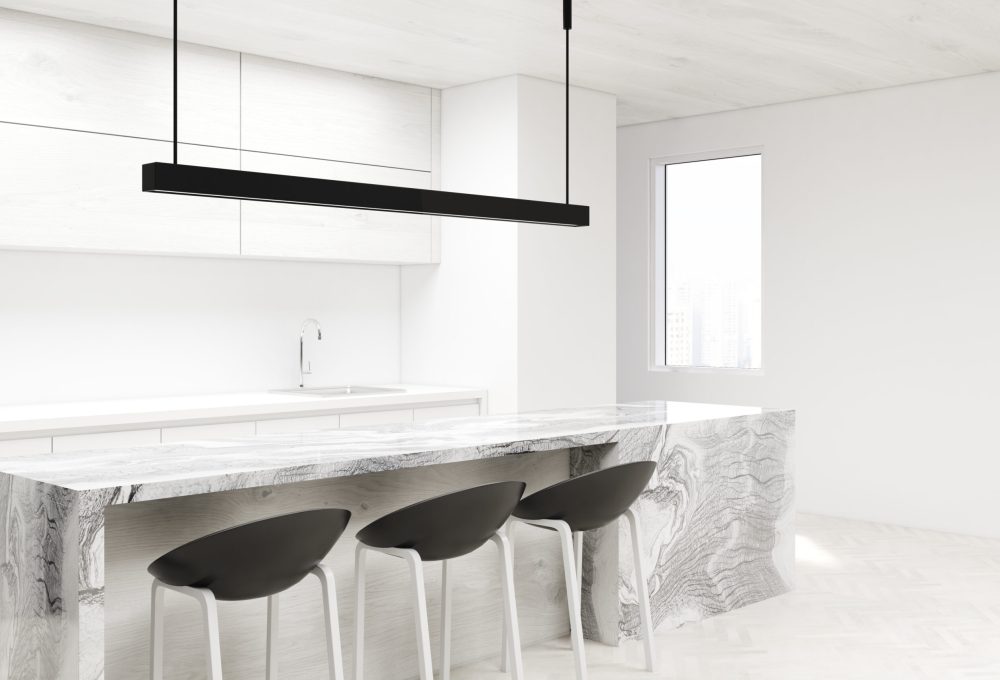
Marble has a look that few materials can match, which is why so many homeowners across New Jersey ask us about marble first.
But marble is a soft, porous natural stone, and the kitchen is one of the hardest working rooms in any home. Before you fall for a slab, it helps to know what caring for it actually involves.
At Alps Craftsman, we would rather you choose marble with your eyes open than regret it a year later. Here is what upkeep looks like day to day, so you can decide with confidence.
Marble forms from limestone, which makes it softer than granite or quartzite. It scratches, chips, and etches more easily than harder stones.
It is also porous, so it can absorb liquids like wine, coffee, and lemon juice when it is not protected. None of this makes marble a poor choice. It just means the care routine matters more.
Pro tip: Ask to see a honed (matte) sample next to a polished one. Honed marble hides small scratches and etch marks better, which many of our kitchen clients prefer.
Sealing is the most important habit for marble in a kitchen. A good sealer slows down how fast liquids soak in, giving you time to wipe spills before they set.
Most marble needs resealing every 6 to 18 months, depending on how much you cook and what you clean with. Harsh disinfectants break sealer down faster than mild soap.
Pro tip: Run a water test. Drop a little water on the surface, and if it darkens within a few minutes, it is time to reseal.
Daily care for marble is simple, but the products you use make a difference. Warm water, a drop of mild dish soap, and a soft microfiber cloth handle almost everything.
Skip vinegar, citrus cleaners, and anything abrasive. Acidic products eat into the surface and leave dull spots. Our full marble care guide walks through the do’s and don’ts in more detail.
Pro tip: Wipe up spills as they happen, especially anything acidic. With marble, speed protects the stone more than any single cleaner.
These two get confused often, and they call for different responses. A stain is discoloration from a liquid soaking in, which sealing helps prevent.
Etching is a dull mark left when acid reacts with the surface itself. Sealing does not stop etching, so coasters, trivets, and cutting boards do the real work here.
Pro tip: Keep a cutting board and a few trivets within reach from day one. Treating marble gently is far easier than repairing it later.
Marble asks for a little more attention than most stones, and knowing the routine ahead of time helps you decide whether it fits your day-to-day. We walk New Jersey homeowners through exactly what that upkeep looks like before a single slab is cut.
Not every part of a kitchen sees the same use. Perimeter counters near the stove and sink take the most punishment, while an island used for baking or coffee sees gentler wear.
If you love the look but worry about upkeep, we often suggest marble on an island or a low-traffic run, paired with a harder stone like quartzite on the busy sections.
Pro tip: Mixing materials lets you get the marble look where it counts and durability where you need it most.
Marble rewards homeowners who do not mind a little routine and who like the way a stone ages with character. If you want a surface you can forget about, a harder material may suit you better.
There is no wrong answer here, only the one that fits how your household actually cooks and lives.
You do not have to guess. Our team has helped homeowners, designers, and builders across New Jersey, New York, and Pennsylvania choose stone that fits both their style and their daily routine.
Come see and feel the slabs in person, ask us the hard questions, and let us walk you through the upkeep before you commit. Contact Alps Craftsman or request a free quote today, and we will help you find a countertop you will love living with.
"*" indicates required fields