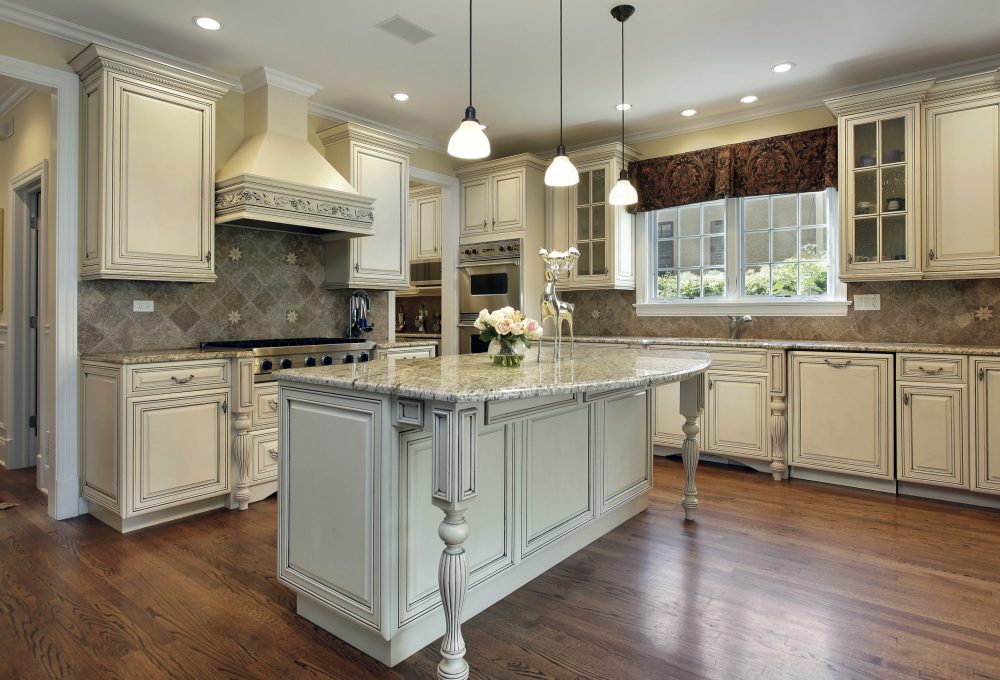
Homeowners searching for countertop options often come across the phrase “engineered granite” and assume it describes a manufactured version of the granite slabs fabricators like us install every week. In reality, granite itself is never engineered. It is a natural igneous rock, cut directly from quarry blocks, and every slab is one hundred percent stone.
The term usually gets applied, sometimes loosely by marketers, to engineered quartz, which is a genuinely man-made product that can resemble granite in certain colorways. Understanding the difference matters before you commit to a material for a kitchen or bathroom remodel.
Our granite countertops begin as magma or lava that cooled slowly underground over millions of years, crystallizing into the mineral patterns you see in a finished slab. Because it comes straight from a quarry, no two slabs are identical, and the veining or speckling in one piece of granite will never match another exactly.
Granite is dense and heat resistant, and it holds up well to scratches from daily kitchen use. As a natural stone, it is porous, so periodic sealing is part of caring for it, and seams between pieces will be visible depending on the size and layout of your countertop run.
Our quartz countertops are the actual engineered product homeowners are usually picturing. Manufacturers grind natural quartz crystal, combine it with resin and pigment, then pour and bake the mixture into slabs. That process is what allows quartz to be produced in a wide range of consistent colors and patterns, including some that mimic the look of granite.
Because the manufacturing process fills every gap with resin, quartz slabs come out non-porous and do not require sealing. The tradeoff is that the resin makes quartz less heat tolerant than natural granite, so trivets and hot pads matter more with this material.
The best way to decide between natural and engineered options is to see them in person. Reach out to Alps Craftsman to schedule a visit to our Somerset design center, where our team can walk you through granite and quartz slabs and help you choose the right fit for your home.
Natural granite wins on heat resistance, which is why it remains popular with homeowners who cook often and like pulling pans straight off the stove. Engineered quartz wins on stain resistance and color consistency, since there is no sealing routine to track and no variation in pattern from one end of the slab to the other.
Both materials can chip if struck hard enough at the wrong angle, and both can be repaired, though repairs tend to blend in more easily on granite because of its busier, more natural patterning.
Pro Tip: If you are set on a granite look but want a non-porous surface, ask to see quartz colors modeled after granite veining before assuming you need to compromise on either performance or aesthetics.
The right choice depends on how your household uses the space. A family that entertains often and wants zero sealing maintenance may lean toward quartz, while a homeowner who wants the organic movement only nature can produce, and does not mind a simple sealing routine, will likely prefer natural granite.
Our team at Alps Craftsman has fabricated and installed both materials across the Tri-State Area for more than three decades, and we can help you weigh the tradeoffs against your specific kitchen or bathroom layout. Browse examples of both in our project gallery before you decide.
The best way to decide between natural and engineered options is to see them in person. Reach out to Alps Craftsman to schedule a visit to our Somerset design center, where our team can walk you through granite and quartz slabs and help you choose the right fit for your home.
"*" indicates required fields