
A recent edition of Kitchen & Bath Design News reveals how countertops are adapting to modern homeowners’ needs, showcasing trends like larger spaces, increased use of natural stone, and customers embracing textured countertops. At Alps Craftsman, serving New Jersey, New York, and Pennsylvania, we’re excited to share insights from our experiences in these vibrant markets. This piece will explore how these trends are uniquely manifesting in the tri-state area, offering a local perspective that broadens the understanding of national data.
Countertop Space Expansion
Q: Recent data from the article indicates that 66.2% of kitchens now have larger countertop spaces than in past years. How do you think this trend impacts kitchen design and functionality?
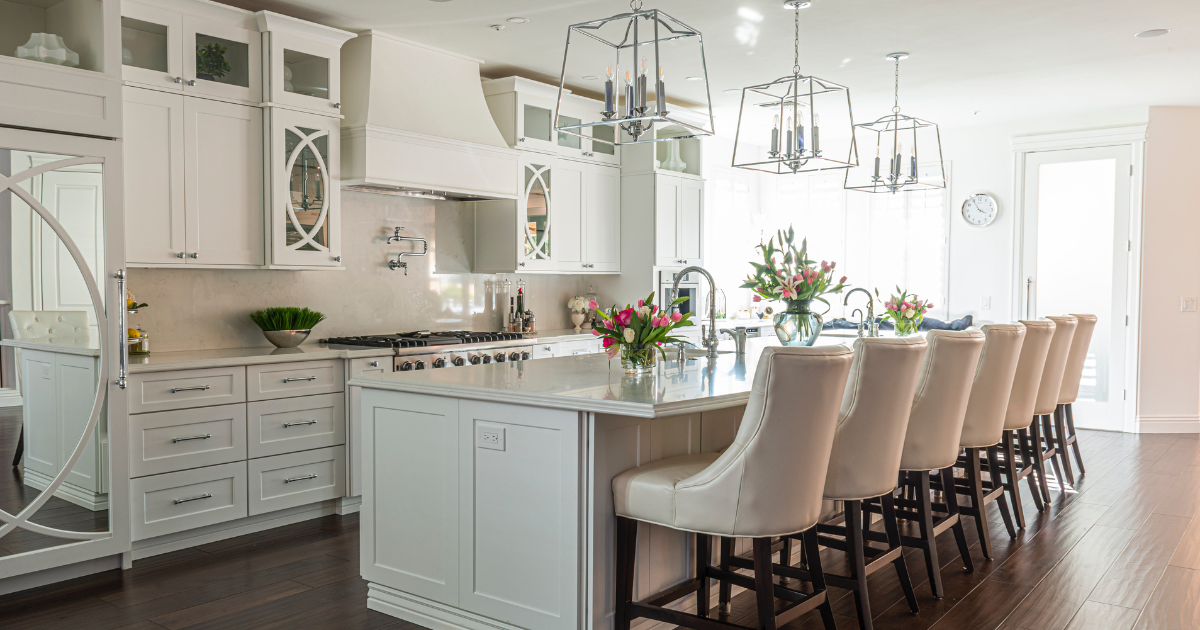
A: This trend caters to the evolving role of the kitchen as not just a space for cooking, but as a versatile hub for dining, socializing, and even working. At Alps Craftsman, we emphasize the importance of a large island which, as discussed in our 2024 Design Trends blog, serves multiple purposes beyond food preparation. It becomes a central gathering spot for meals, social interactions, and various everyday activities.
We agree with the trend highlighted in recent articles that suggests a shift towards maximizing countertop areas at the expense of traditional storage solutions like larger pantries. This reflects a broader design philosophy where the aesthetic and functional appeal of countertops is becoming a focal point, overshadowing the traditional emphasis on cabinetry. The quality and design of countertops are now prime considerations for homeowners, influencing their choice of materials and the overall spatial arrangement within the kitchen.
Additionally, the design modifications accommodate other innovative features like integrated bars or coffee stations, enhancing the kitchen’s functionality and aesthetic appeal. This evolution in kitchen design not only meets the modern homeowner’s diverse needs but also elevates the kitchen’s role within the home.
Multiple Countertop Colors in Kitchens
Q: With the article noting that 54.5% of designers are incorporating two different countertops into kitchen designs, how is Alps Craftsman responding to this trend in the NJ, NY, and PA markets? Are there specific combinations of materials or designs that are particularly popular among your clients?
A: At Alps Craftsman, we are fully embracing the trend observed nationally among our clients in the NJ, NY, and PA markets, where the mix of functionality and aesthetic appeal is highly valued. Many of our kitchen designs feature a combination of materials that cater to both practical needs and design preferences. For instance, we often use a more muted material for the perimeter countertops, such as engineered quartz, which offers a subtle elegance and consistency, while opting for a dramatic, statement-making material like granite or quartzite for the island. This not only enhances the kitchen’s visual appeal but also provides the heat resistance necessary for cooking and hosting duties.
In terms of specific combinations, the mix of quartz and natural stone is prevalent. This pairing allows for both a design contrast and a functional balance—quartz for uniformity and ease, and natural stone for unique patterns and durability. Occasionally, we also see combinations of two different types of quartz, one subtle and one more patterned, to achieve a distinctive look while maintaining material consistency. Overall, the choice of combining two different countertop materials in a kitchen is driven by both the desire for a unique aesthetic and the need for practical functionality in everyday use.
Material Most in Demand
Q: Engineered quartz is noted as the countertop material growing most in demand, with 30.1% favoring it. Are you seeing that in the Tri-State area or is natural stone more popular among your clients?
A: Engineered quartz has indeed surged in popularity, as highlighted by the 30.1% favorability in this study. This popularity can be attributed to several factors. Firstly, engineered quartz is known for its durability and low maintenance requirements, which makes it an appealing choice for busy households. Additionally, the material’s uniformity allows for a consistent aesthetic that can fit seamlessly into a variety of design styles, which is particularly valued in modern home decor. However, it’s important to note that while engineered quartz is growing in demand, when you combine the growth of natural stone materials such as granite, marble, and quartzite, they collectively exceed the growth of engineered quartz, with a 36.6% increase. This suggests that while engineered quartz is popular, there is a significant and growing appreciation for natural stone.
In our projects, we’ve observed a tremendous growth in natural stone, especially in quartzite. Our suppliers are increasing their inventory of these materials, which are not only becoming more affordable but also available in unique and striking patterns that cater to current trends towards darker and earth-toned colors. Many of our clients still prefer natural stone for its unique patterns and color variations that engineered quartz can’t fully replicate. While engineered quartz is popular for its practical benefits and consistent aesthetics, natural stone is experiencing a resurgence in demand, particularly for clients seeking unique and high-quality materials for their design projects.